
Soft tailoring keeps the clarity of a blazer but removes much of the stiffness associated with traditional suiting. Shoulders may be lightly constructed, fabrics drape rather than stand rigidly, and trousers move instead of holding a severe crease. Lyst described the 2025 version through flowing lines and gentle proportions, while London Fashion Week reporting picked out oversized blazers and slouchy trousers. The result is less about dressing for a boardroom and more about bringing a little structure to ordinary clothes.
That ease is exactly why the trend can be useful, but ‘relaxed’ does not mean any oversized jacket will work. Fit, fabric and proportion still matter. The best blazer creates a frame without swallowing the person inside it, works with the layers you genuinely wear and earns a place in more than one part of the week.
Understand what makes tailoring feel soft
Traditional tailoring often relies on firm cloth, padding, lining and a precise waist or shoulder. Soft tailoring reduces some of those elements. Look for unstructured or lightly padded shoulders, fluid wool blends, linen blends, twill, ponte or substantial jersey. A partial lining can improve movement and breathability, while a full lining may help the jacket slide over knitwear. Neither is automatically better; the intended season and fabric decide.
Cut also changes the mood. A slightly dropped shoulder, longer line or room through the body feels easy, but the lapels, sleeves and hem should still appear intentional. Relaxed trousers often have pleats, a wider leg or a softer waistband. Dresses and skirts can participate through clean seams and draped fabric rather than obvious suit details.
Choose the blazer by shoulder and movement
Start at the shoulder because it is the hardest area to alter. A natural shoulder seam should sit close to your own shoulder; a deliberately dropped seam should fall evenly rather than collapse. Raise your arms, reach forward and sit down. The back should not pull sharply, and the sleeves should not twist. If you plan to wear a jumper beneath it, try the blazer with one rather than relying on a thin fitting-room top.
Then consider length. A longline blazer can streamline a column of colour and balance wide trousers, while a shorter boxy cut works well with high-waisted bottoms and fuller skirts. Petite and tall bodies do not require fixed rules; the visual relationship between jacket, torso and leg matters more. Use a mirror from several angles and photograph the outfit at normal standing distance.
Let fabric match the season and routine
Fine wool and wool blends offer drape and temperature regulation across much of the year. Linen and linen blends suit warmer months but will crease; that can be part of their relaxed character. Cotton twill feels casual and dependable, while jersey creates the comfort of a cardigan with a sharper outline. Suede and velvet make a strong statement but are less adaptable to wet weather and informal care.
Check the label before purchase. Dry-clean-only tailoring may be reasonable for an occasional jacket but demanding for a weekly commute. Darker colours disguise small marks, while pale pastels and cream may require more attention. If the fabric pills or shines after brief friction in the fitting room, it may not tolerate a bag strap or desk edge well.
Balance volume instead of fearing it
An oversized blazer does not always need skinny trousers. Modern soft tailoring often combines volume on both halves, but it uses control points to keep the wearer visible. Show a fitted or neatly tucked base layer, expose the wrist, define the waist with trouser placement or choose a clean shoe. One or two of these details are enough.
If you prefer clearer definition, pair the relaxed jacket with straight jeans, a column dress or a slim knitted skirt. If you enjoy broader silhouettes, use wide-leg trousers in a fabric that falls cleanly and keep the top simple. The goal is not to make the body look smaller; it is to make the outfit’s proportions appear chosen.
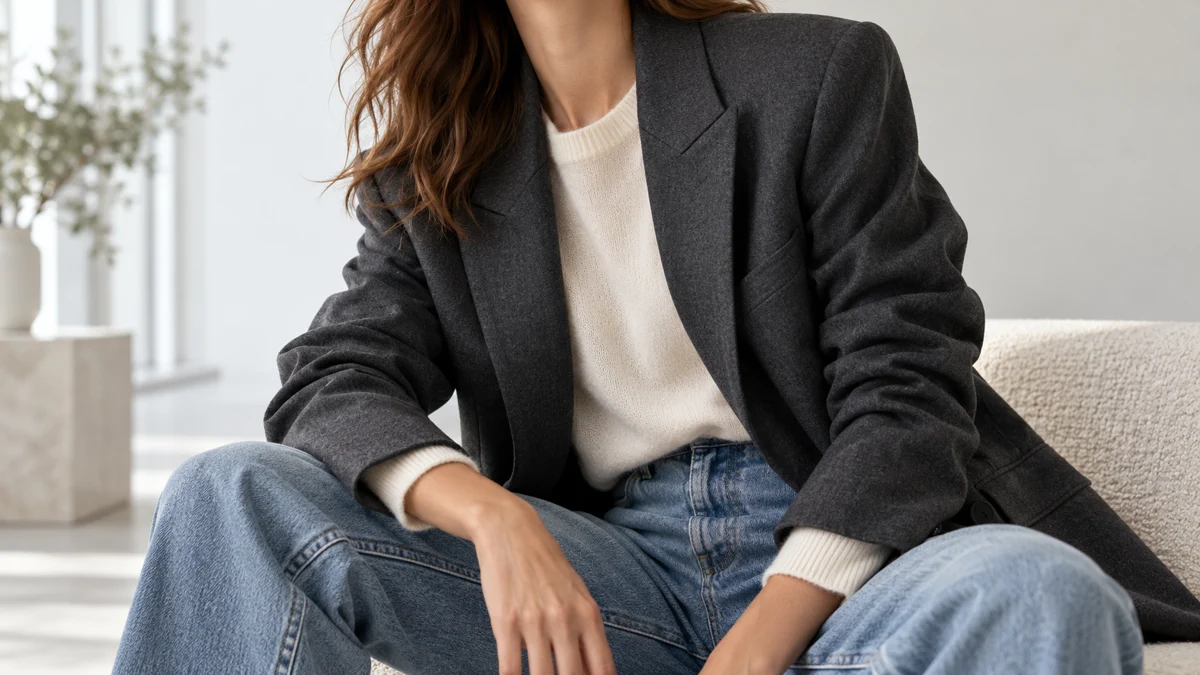
Wear a relaxed blazer with denim
Denim is the easiest route into soft tailoring because it removes the sense of a full suit. A white T-shirt, straight blue jeans and an unstructured blazer form a reliable baseline. Change the shoes and accessories to move from weekend to work: trainers and a cross-body bag feel casual; loafers and a structured tote look more polished.
Try dark denim with charcoal or navy for a quiet combination, or faded blue with brown, cream or olive for more contrast. A blazer with subtle pinstripes can also work, provided the rest remains simple. Cuffing the sleeves can reveal the wrist and reduce the visual weight, but avoid forcing thick fabric into a bulky roll.
Try a full soft suit without looking corporate
A coordinated suit is surprisingly low effort because the colour decision is already made. To keep it relaxed, choose a simple base such as a fine knit, vest or crew-neck T-shirt rather than a formal shirt. Flat shoes, clean trainers or low boots change the tone immediately. Jewellery can be sculptural or minimal, but it does not need to announce ‘office’.
Separates do not have to match perfectly. Trousers and a blazer in related neutrals can create the same vertical effect. If the fabrics differ, make the difference obvious: brushed wool with smooth twill, for instance. Near-matching blacks or navies can look accidental when their depths and textures are only slightly off.
Layer the blazer over dresses and skirts
A relaxed blazer adds a useful edge to fluid dresses, slip shapes and knitted columns. The combination works because the jacket provides a frame while the dress supplies movement. For daytime, add boots or trainers; for an evening, switch to a refined flat or heel. A long blazer over a midi dress can be elegant, though the two hems should feel clearly separated rather than almost aligned.
With skirts, consider where volume sits. A full skirt often benefits from a shorter or gently shaped jacket, while a slim midi can take a longer blazer. This is not a strict formula—an oversized jacket with a full skirt can look excellent—but a visible waist or compact top underneath helps organise the proportions.
Use colour to keep tailoring approachable
Navy, charcoal, chocolate and olive are practical foundations, but soft tailoring also works in powder blue, muted pink, stone and butter yellow. A pale blazer can refresh denim and dark trousers without requiring a matching suit. If colour makes you hesitant, keep the silhouette familiar; if the shape is dramatic, choose a dependable neutral.
Tonal dressing amplifies the fluid effect. Combine several shades of grey, brown or cream, varying texture to avoid flatness. Alternatively, use the blazer as the only strong colour against a white top and denim. This single-colour method makes the jacket look purposeful and keeps styling quick.
A relaxed-blazer fitting checklist
- The shoulder line looks intentional, whether natural or dropped.
- You can reach, sit and carry your usual bag without sharp pulling.
- The blazer closes if it is designed to, even if you usually wear it open.
- Sleeves can be altered without disrupting important cuff details.
- Your normal base layers fit underneath without bunching.
- The length works with at least two bottoms and one dress or skirt you own.
- Care instructions suit how often you expect to wear it.
Five formulas for a normal week
- Office: fluid trousers, fine crew-neck knit, relaxed blazer and loafers.
- Weekend: straight jeans, cotton T-shirt, blazer and trainers.
- Dinner: column dress, longline blazer, simple jewellery and refined flats.
- Creative workplace: wide trousers, tonal vest, boxy blazer and ankle boots.
- Transitional weather: shirt, knitted vest, blazer, dark denim and a raincoat carried over the top.
Care for tailoring so it keeps its line
Hang blazers on broad, supportive hangers and give them space. Brush off surface dust, air after wear and treat marks according to the care label rather than repeatedly cleaning the whole garment. Empty pockets before storage so they do not sag. Steam can release creases in many fabrics, but always test carefully and follow the manufacturer’s guidance.
Small alterations can transform a second-hand or existing blazer. Sleeve length, waist suppression and trouser hems are often adjustable, while major shoulder changes may be costly. A tailor can advise before you commit. Soft tailoring is particularly suited to rewear because it is less tied to a strict office uniform and can be restyled with casual pieces.
The relaxed blazer works when it serves as a bridge: smarter than a cardigan, easier than a structured suit and adaptable enough for changing plans. Choose it for movement, fabric and proportion rather than size label alone. Once it sits comfortably over denim, fluid trousers and a dress, soft tailoring stops being a runway trend and becomes a practical way to get dressed.

 狭い 部屋でも 暮らしやすい 余白を つくる 収納の 工夫 <p style=' font-weight: normal; line-height: 1.9rem !important; font-size: 17px !important;'> 床を埋めず、動線と安全を守りながら持ち物の定位置を決める </p>
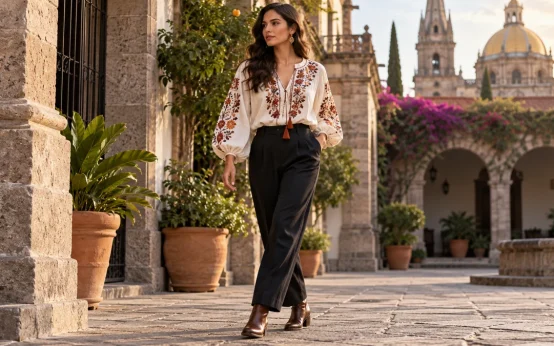 Cómo adaptar el estilo boho moderno cotidiano <p style=' font-weight: normal; line-height: 1.9rem !important; font-size: 17px !important;'> Texturas, capas y accesorios bien editados para llevar la tendencia sin parecer disfraz. </p>
 Rutina de armario que ahorra tiempo diario <p style=' font-weight: normal; line-height: 1.9rem !important; font-size: 17px !important;'> Un sistema simple para encontrar, combinar y guardar tu ropa con menos decisiones cada mañana. </p>