
Moving into a rented home can create pressure to make every room look finished immediately. Empty corners feel like problems, neutral walls seem impersonal and social media offers an endless stream of instant transformations. Slow decorating takes the opposite view. It treats the first months as useful research and builds the interior in stages, after you understand the light, storage, routines and limitations of the property.
This approach is particularly well suited to renting because many permanent changes require permission and future moves remain possible. Instead of spending heavily on a scheme designed for one address, you can prioritise portable furniture, lighting, textiles, art and objects that express your taste wherever you live. The result may take longer, but it is usually more personal and less wasteful.
Read the tenancy agreement before planning changes
Begin with the contract, inventory and check-in photographs. Look for clauses about painting, wallpaper, drilling, fixtures, flooring and gardens. Shelter England advises tenants to get the landlord’s agreement in writing before making improvements; rules and expectations can vary by tenure, landlord and part of the UK. Scottish Government model tenancy guidance, for example, states that advance written consent is needed for alterations and decorating under that model agreement.
Do not assume that a removable product is automatically permitted or harmless. Adhesives can lift paint, picture strips can fail on textured walls and peel-and-stick coverings can leave residue. If you want to paint, mount shelves or change fittings, describe the proposal clearly, ask who will pay and confirm whether reinstatement is expected when you leave. Keep the written response with your tenancy records.
Live in the rooms before buying for them
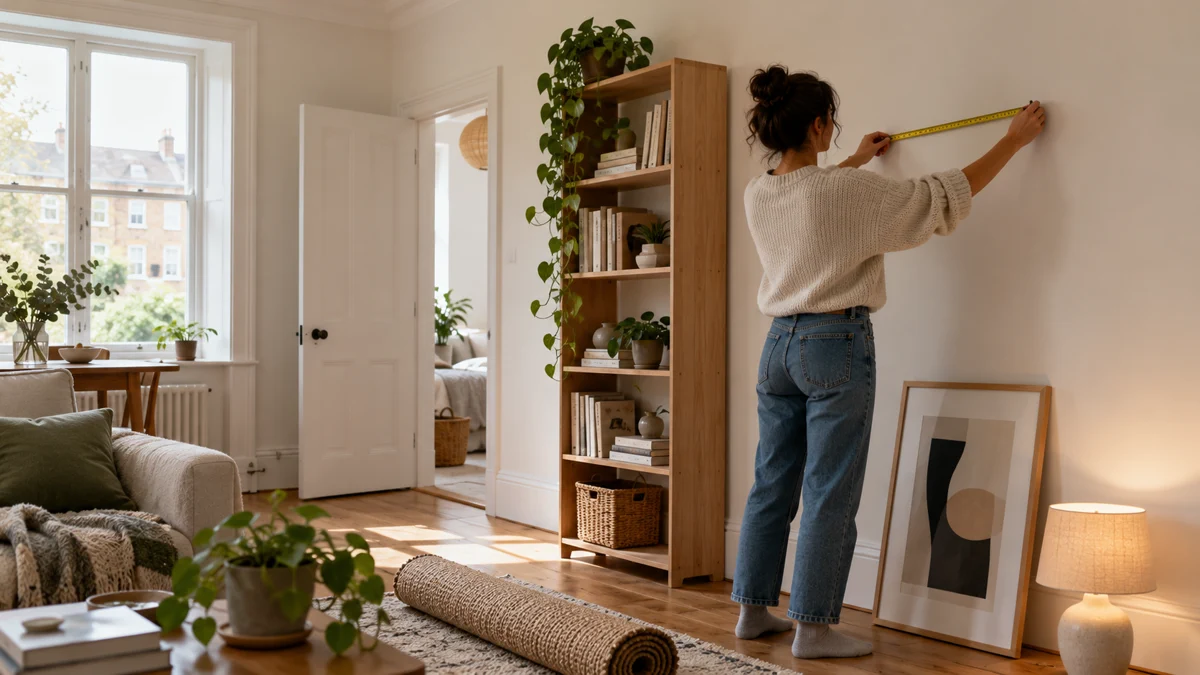
Spend several weeks noticing how the home behaves. Where does morning light fall? Which corner becomes gloomy after work? Where do bags accumulate, and which route through the room needs to remain clear? Measure walls, doors, alcoves, radiators and access points. A sofa that fits the floor plan may not pass through the stairwell; a tall bookcase may block a socket or clash with a sloping ceiling.
Keep a simple room note on your phone. Record frustrations and successful habits rather than vague shopping desires. ‘Need a landing place for keys by the door’ leads to a useful solution; ‘hallway needs styling’ can lead to clutter. Slow decorating is not indecision. It is a period of gathering evidence before spending money or requesting alterations.
Fix function before chasing a finished look
A room feels calmer when everyday actions are supported. Address lighting, seating, storage and privacy before decorative extras. In a bedroom, effective curtains and a comfortable bedside light may matter more than matching cushions. In a living room, a table at the right height and enough lamps can change how the space works. In a narrow hall, hooks or a freestanding rail may prevent the rest of the home becoming a drop zone.
List each room’s jobs and rank them. A living area might need to host relaxing, working and eating; a spare room might alternate between guests and exercise. Furniture that supports several functions is valuable, but avoid clever pieces that do none of them comfortably. A proper desk used daily may deserve space more than a small console that looks elegant but strains your back.
Create a portable foundation
Start with items that can travel: rugs, lamps, mirrors, freestanding shelves, curtains where suitable, side tables and artwork displayed without prohibited fixings. Choose dimensions with some flexibility. A modular shelving unit, drop-leaf table or compact armchair is more likely to adapt to another layout than a piece cut precisely for one awkward recess.
Portable does not have to mean temporary-looking. Solid second-hand furniture, well-made lamps and simple textiles can build character over time. Before buying, check access, weight and whether you can move the item safely. Keep spare parts and assembly instructions in a labelled envelope. If a piece replaces the landlord’s furniture, agree in writing where the original will be stored and who is responsible for it.
Layer lighting without altering electrics
One ceiling light rarely creates a comfortable room. Build layers with floor lamps, table lamps and plug-in task lights, using warm or cool bulbs according to the activity. A focused lamp beside a chair supports reading; a shaded lamp at mid-height softens a living room; a bright task light helps at a desk. Position mirrors to reflect useful daylight rather than create glare.
Use only products suitable for the socket and fitting, keep cables away from trip routes and do not overload adaptors. Electrical changes, including replacing fixed fittings, should be discussed with the landlord and carried out safely by an appropriate professional where required. A decorative lampshade may be a straightforward reversible update, but store the original carefully for the end of the tenancy.
Add colour through large reversible surfaces
Paint is not the only way to change a palette. Curtains, bedding, rugs, throws and large artworks can shift the balance of a room without touching the walls. Repeating a colour in two or three places creates coherence: perhaps rust in a rug, cushion and print, or blue in bedding and a lamp base. Keep the main investment pieces adaptable, then let lower-cost textiles carry seasonal changes.
Fabric samples are useful because colour changes with light. Test them in the room at morning, afternoon and evening before ordering a large rug or curtains. Measure carefully, especially around radiators and doors. If the property is furnished, work with the existing sofa or bed rather than attempting to hide it beneath layers that make it less comfortable.
Collect art and objects gradually
A personal home is rarely created by buying a coordinated set of ornaments. Display objects connected to places, people, interests and everyday rituals. Books, ceramics, framed postcards, photographs and found natural materials can create a story without costing much. Leave some empty space so new discoveries have somewhere to go.
For walls, follow the tenancy terms and product guidance. A picture ledge requires permission if it must be drilled; leaning frames on a mantel or sturdy shelf may be safer. Adhesive strips need the correct surface, weight limit and removal method, but even then damage is possible. Photograph the wall before installation and stop if paint appears unstable.
Buy second-hand with a clear brief
Slow decorating gives you time to search charity shops, resale platforms, auctions and local groups. Use exact measurements and a short materials list. Check upholstered furniture for condition, odour and fire-safety labels where relevant; examine wood for damage and make sure drawers, joints and doors work. Factor transport into the price and never lift something beyond your ability.
Second-hand pieces need not match. A consistent element—wood tone, line, colour or hardware—can connect them. Cleaning, polishing or replacing a handle may be enough. Structural repair, reupholstery and electrical work require suitable skills, so obtain professional advice rather than turning a bargain into a safety risk.
Plan one room in three passes
- First pass: function. Arrange existing furniture, solve privacy, add essential storage and ensure there is adequate task lighting.
- Second pass: comfort. Introduce a rug, curtains where permitted, bedside or side tables and textiles that improve sound and warmth.
- Third pass: personality. Add art, books, plants suited to the light and a few objects with meaning. Stop before every surface is full.
These passes can take weeks or months. Photograph the room between them. Images reveal crowded corners, weak lighting and awkward scale in a way that daily familiarity can hide. They also prevent unnecessary purchases by showing how much has already changed.
Keep a renter’s decorating file
- The tenancy agreement, inventory and original check-in photographs.
- Written permission for paint, drilling, fixtures or other alterations.
- Paint names, product details and any agreed reinstatement instructions.
- Receipts and manuals for furniture, lighting and removable products.
- A list of landlord-owned items moved into storage.
- Current room measurements and doorway dimensions.
- Photographs after approved work is completed.
This file makes future conversations clearer and moving out less stressful. Before the tenancy ends, review the agreement and written permissions rather than relying on memory. Allow time for agreed reinstatement and remove temporary products carefully according to their instructions.
Know when decorating is not the answer
Damp, mould, faulty electrics, unsafe flooring, leaks and broken heating are not styling problems. Report repairs through the correct channel and keep records. Do not cover damp with furniture, wallpaper or panels, and avoid placing belongings where they prevent inspection or ventilation. Shelter and local housing advice services can explain options when repair responsibilities are unclear.
Likewise, a room may feel wrong because it is overloaded rather than undecorated. Edit before buying. Move surplus items into another room temporarily, test a new layout and notice whether space and light solve the discomfort. The cheapest object is still clutter if it has no useful or meaningful role.
A slower route to a home that feels yours
Set a modest monthly budget and one priority at a time. Finish the bedside lighting before shopping for prints; solve coat storage before adding hallway accessories. Keep a wish list for thirty days and remove anything that no longer answers a specific need. This rhythm makes room for second-hand finds and prevents a short-lived style from controlling every purchase.
A rented interior does not need to look provisional, nor does it need a dramatic makeover. By checking permission, observing the rooms and choosing portable layers, you can create depth without pretending the property is yours to alter freely. Slow decorating lets the home develop alongside your routines—and that is what makes it feel genuinely personal.

 狭い 部屋でも 暮らしやすい 余白を つくる 収納の 工夫 <p style=' font-weight: normal; line-height: 1.9rem !important; font-size: 17px !important;'> 床を埋めず、動線と安全を守りながら持ち物の定位置を決める </p>
 Cómo adaptar el estilo boho moderno cotidiano <p style=' font-weight: normal; line-height: 1.9rem !important; font-size: 17px !important;'> Texturas, capas y accesorios bien editados para llevar la tendencia sin parecer disfraz. </p>
 Rutina de armario que ahorra tiempo diario <p style=' font-weight: normal; line-height: 1.9rem !important; font-size: 17px !important;'> Un sistema simple para encontrar, combinar y guardar tu ropa con menos decisiones cada mañana. </p>