
Asking whether the Wells Fargo Reflect Card is worth it depends entirely on how you plan to use it. For someone managing an existing balance or planning a major purchase, the answer can be a resounding yes. For a rewards chaser or an international traveler, it falls short pretty quickly.
The Reflect Card doesn’t try to be everything. It’s built around a specific value proposition — one of the longest 0% introductory APR periods on the market, combined with practical everyday protections — and it executes that proposition well. Understanding where it excels and where it limits you makes the decision straightforward.
The 21-Month 0% APR: What It Actually Means in Practice
The headline feature of the Reflect Card is 21 months of 0% APR on both purchases and qualifying balance transfers from other cards. That’s nearly two years to finance a large purchase or consolidate higher-interest debt without paying a cent in interest.
The practical value here is substantial. Someone moving $5,000 of credit card debt from a card charging 24% APR to the Reflect Card saves roughly $2,000 in interest over that period — without changing their monthly payment amount. The same math applies to a big-ticket purchase: furniture, appliances, medical bills, home repairs.
What happens after 21 months matters just as much. The variable APR — which ranges from 18.24% to 29.99% depending on your credit profile at the time of approval — kicks in on any remaining balance. Planning to clear the balance before that point is essential; the card’s value evaporates quickly if you carry a large balance into the standard rate period.
The Protections That Make the Reflect Card Genuinely Useful
Beyond the intro APR, the Wells Fargo Reflect Card includes protections that translate into real savings for the right person.
Cell phone protection covers up to $600 per claim — with a $25 deductible — when your phone is stolen or damaged. The activation requirement is simple: pay your monthly cell phone bill with the Reflect Card. For someone who pays $80 a month for their phone plan, that protection costs nothing extra and covers a risk that otherwise runs into hundreds of dollars.
Roadside assistance is available 24 hours a day. Jump starts, flat tire changes, locksmith services, and towing are all included. This isn’t a fringe benefit — for anyone who drives regularly, the cost of a single roadside service call easily exceeds what they’d pay for the year in card fees (the Reflect Card has no annual fee).
Zero liability protection covers unauthorized transactions, and the My Wells Fargo Deals program provides personalized cashback offers at participating merchants. The FICO score monitoring, available through Credit Close-up, gives you monthly visibility into the number lenders actually use to evaluate you.
Who the Wells Fargo Reflect Card Is Actually Built For
The clearest use case is debt consolidation. If you’re carrying a balance on one or more cards charging 20%+ APR, transferring that balance to the Reflect Card and paying it down interest-free over 21 months is one of the most effective legal debt reduction strategies available to ordinary consumers.
The second strong case is a planned large purchase. Knowing you’ll be buying something expensive in the next few months — and knowing you’ll pay it off within 21 months — makes the Reflect Card a smarter financing vehicle than most personal loans or store financing options.
Regular drivers who pay their cell phone bill and want no-annual-fee card also fit this card well. The combination of phone protection and roadside assistance delivers tangible risk coverage without any recurring cost beyond the card’s standard foreign transaction fee when used abroad.
Where the Reflect Card Falls Short
If you’re looking for ongoing rewards — cashback, points, travel miles — the Reflect Card isn’t designed for that. The My Wells Fargo Deals program provides some personalized offers, but it doesn’t replace the consistent earning structure of a dedicated rewards card.
International use costs 3% on every foreign transaction. For anyone who travels abroad with any regularity, this adds up quickly. A no-foreign-transaction-fee card is a better choice for travel.
The card also tends to favor applicants with good to excellent credit. If your score is below 670, approval is less likely, and the APR you’d receive after the intro period may be on the higher end of the range.
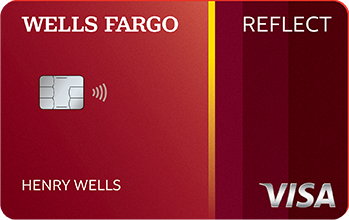
Wells Fargo Reflect® Card
Wells Fargo Reflect Card vs. Alternatives
| Card | 0% Intro APR Period | Annual Fee | Best Use Case |
|---|---|---|---|
| Wells Fargo Reflect | 21 months | $0 | Balance transfers, large purchases |
| Citi Diamond Preferred | 21 months | $0 | Balance transfers focus |
| Petal 1 Visa | None | $0 | Credit building from scratch |
Frequently Asked Questions — Wells Fargo Reflect Card
Do I need to be an existing Wells Fargo customer to apply?
No. The card is open to new customers. However, Wells Fargo does have a policy restricting applicants who have opened a Wells Fargo credit card in the past 15 months or who currently hold multiple Wells Fargo cards.
Does the 0% APR apply to balance transfers immediately?
Balance transfers must be completed within 120 days of account opening to qualify for the introductory rate. Transfers requested after that window are subject to the standard variable APR.
Is there a balance transfer fee?
Yes. Balance transfers incur a fee — typically a percentage of the amount transferred. Factor this into your savings calculation when comparing the cost of the transfer against the interest you’d save.
How does the cell phone protection work in practice?
Pay your monthly cell phone bill with the Reflect Card. If your phone is stolen or suffers accidental damage, file a claim with the benefit administrator. Coverage is up to $600 per claim with a $25 deductible, and you can make up to two claims per 12-month period.
What credit score do I need to qualify?
Wells Fargo doesn’t publish a minimum, but most approved applicants have good to excellent credit — generally scores of 670 and above. Applicants with lower scores may be approved but at the higher end of the APR range.
Is the Wells Fargo Reflect Card Worth It?
The answer to whether the Wells Fargo Reflect Card is worth it is yes — for a specific type of user. If you have good credit, a balance transfer or large purchase in your near future, and you drive a car with a cell phone plan, this card delivers genuine financial value at zero annual cost. The 21-month runway is one of the most generous in the market for this category. The mistake would be getting it without a clear plan: if the balance isn’t cleared before the intro period ends and the standard APR takes over, the math turns quickly in the wrong direction.
Wells Fargo Reflect® Card

 FIT Mastercard Credit Card Review: The Honest Breakdown for Anyone Starting from Zero <p style=' font-weight: normal; line-height: 1.9rem !important; font-size: 17px !important;'> Who the FIT Mastercard actually makes sense for, what the double credit limit really means, which fees matter most, and when you should consider something else entirely. </p>
  Petal 1 Visa Card for Bad Credit: The Real Story Behind the “No Credit Score Needed” Claim <p style=' font-weight: normal; line-height: 1.9rem !important; font-size: 17px !important;'> How the Petal 1 actually evaluates applicants without a traditional credit score, who gets the most out of it, and where other cards might serve you better. </p>